

What Size of Paper Bags Is Suitable for Packaging Takeaway Meals?
Standard Paper Bag Sizes for Takeaway Meals
Understanding standard dimensions ensures your food packaging maintains freshness while minimizing material waste. Small, medium, and large classifications provide versatile solutions for different meal volumes.
Small, Medium, and Large Paper Bag Dimensions (Metric and Imperial)
The small paper bags we see most often are around 5 by 7 inches with a depth of about 3.5 inches (that's roughly 12.7cm x 17.8cm x 8.9cm). They work great for holding individual sandwiches or those little pastry boxes people love so much. When it comes to medium sized bags, they usually fall somewhere between 8x10x4 inches (about 20.3cm x 25.4cm x 10.2cm) all the way up to 10x13x5 inches (approximately 25.4cm x 33cm x 12.7cm). These bigger ones can handle combo meals plus whatever sides come along with them. For really large items like family size pizzas or when someone wants multiple courses packed together, the big boys kick in starting at around 12x15x6 inches (roughly 30.5cm x 38.1cm x 15.2cm). The standard sizes have been worked out this way because they strike a good balance between what costs money to make versus how strong they need to be. Larger bags require thicker paper stock, usually somewhere between 200 and 250 GSM to hold everything without collapsing under the weight.
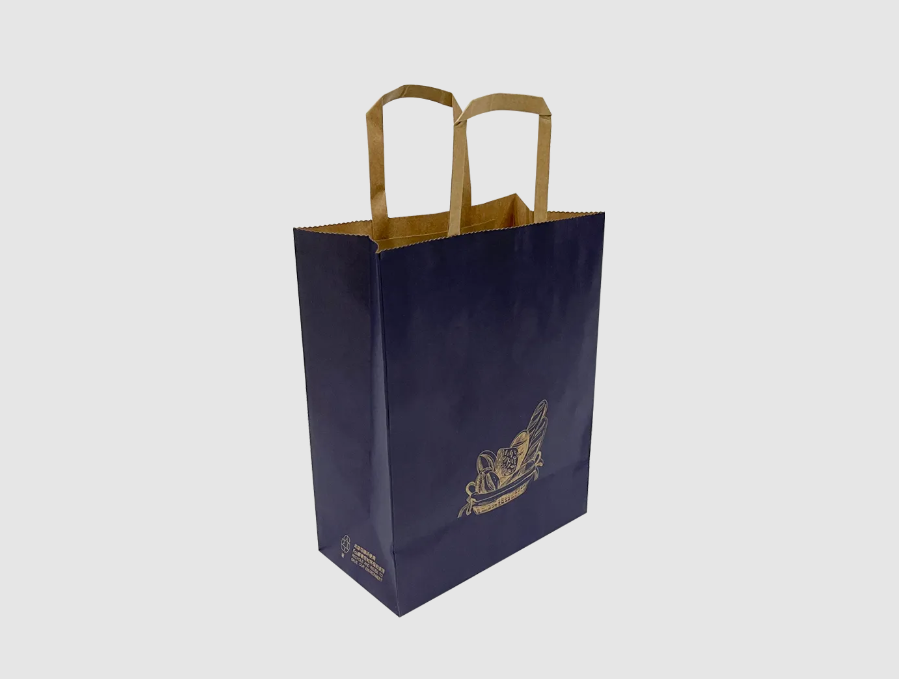
How Width — Gusset — Height Defines Functional Paper Bag Capacity
Functional capacity hinges on three interlinked dimensions:
- Width dictates front-to-back container space
- Gusset (side folds) enables lateral expansion for irregular shapes
-
Height determines vertical stacking limits
For example, an 8" — 4" — 10" bag offers 320 cubic inches (5,244 cm³) theoretical volume. However, gusset compression reduces usable space by ~15%. This dimensional synergy prevents leakage—a bag with insufficient gusset depth strains at seams when holding wide containers. Always verify actual capacity exceeds container footprints by 1–2 inches per dimension.
Matching Paper Bag Size to Food Type and Container Geometry
Sizing Guidelines for Common Takeaway Containers: Footprint, Stack Height, and Clearance Needs
Picking out the correct paper bag begins with some basic measurements. First figure out the base dimensions of whatever needs packing (just multiply length times width). Then check how high things will stack if there are multiple items going in together. Don't forget to leave about an inch or two extra room at the top. Soup bowls tend to be pretty tall so they really need bags over 10 inches high otherwise they'll get crushed during transport. Pizza boxes are different story altogether since their bases can stretch beyond 14 inches across without folding properly. When stacking several items inside one bag, give yourself roughly 20 percent more vertical space than what looks necessary. Take those standard 3 inch tall burger boxes for instance three of them would actually need around 7.2 inches total clearance when packed together. Not leaving enough breathing room leads to all sorts of problems like leaks and soggy messes because dampness breaks down the paper strength by almost half according to research from folks who study packaging materials regularly.
Optimal Paper Bag Sizes by Meal Category: Sandwiches, Burgers, Pizzas, and Dense vs. Flat Foods
- Sandwiches/Burgers: Use tall bags (¥8" height) with 6–8" width to accommodate upright positioning. Heavier burgers require 200+ GSM paper to prevent handle failure.
- Pizzas/Flat Foods: Shallow bags (4–5" height) with wide bases (14–18") prevent sliding; corner reinforcements reduce grease seepage.
-
Dense Meals (e.g., rice bowls): Square-bottom bags with 8–10" gussets distribute weight evenly, while vented designs reduce condensation by 30%.
Prioritize gusset width over height for irregular containers—a 3" gusset fits round soup containers better than narrow alternatives. Undersized bags increase spill risks by 58% during transport, per logistics data from the National Restaurant Association’s 2023 Foodservice Packaging Benchmark Report.
Operational and Performance Factors Influencing Paper Bag Sizing
Weight Capacity Ranges and Structural Integrity: Selecting the Right Paper Bag for Load Requirements
Choosing the right paper bag based on weight capacity stops those annoying failures when transporting food. Most stores offer everything from light duty bags holding around 1-2kg for simple items like sandwiches right up to heavy duty ones capable of carrying over 5kg for full meal sets. The thickness matters too. Look at GSM numbers on packaging specs sheets. Around 150 to 200 GSM works well for regular takeaway orders without breaking the bank. Handles need reinforcement and bottom sections should be double layered if possible. Bags with small gussets just won't hold up under pressure. Check what kind of loads we're talking about before finalizing any order. Overloaded bags account for roughly 40-45% of all packaging issues reported by delivery services last year according to recent surveys. Better yet, test different bag types with real containers during peak hours to see how they handle everyday stress situations.
Consequences of Improper Sizing: Heat Loss, Spillage, Brand Perception, and Customer Experience
When paper bags are too big for the food inside, they let out heat much quicker because there's just too much empty space. Tests by the Institute of Food Technologists show meals can cool down about half as fast in oversized bags compared to properly sized ones. On the flip side, if bags are too small, stuff tends to spill everywhere since containers keep moving around inside. This isn't just messy it actually poses serious food safety issues. Restaurants need to watch out here because research from the Food Service Journal in 2023 found that nearly four out of five customers link bad packaging experiences directly to thinking poorly about the restaurant itself. People who have had problems with their takeout will often post about it online and definitely won't come back for seconds. Plus, badly fitting bags just look sloppy when handed over at pickup counters. The sweet spot? Make sure there's no more than an inch and a half of extra room around whatever goes inside. This simple adjustment keeps food warm longer and stops things from shifting around. Good packaging isn't just another expense it becomes something that helps keep customers coming back again and again.